

A deck anyone can build and nobody can break.
A 22-layout system for a team that pitches constantly. Every deck was being rebuilt from scratch, which meant every deck looked like whoever happened to build it. The fix was not a nicer template. It was fewer decisions.
22 layouts
one for every question a presenter actually has
Two colors
one typeface, one grid, no exceptions
Built to hand off
designed for people who are not designers
 |  |  |
|---|---|---|
 |  |  |
 |  |  |
The challenge.
OSI pitches McDonald’s constantly, in a category where the argument is throughput, spec and consistency. The decks were being built by the people who know that material best, which is right, and who have no time to art direct a slide, which is the problem.
So every deck started from the last deck. Type sizes drifted, charts arrived in whatever colors Excel handed over, and a slide about consistency looked nothing like the one before it.
A template nobody can follow is just a suggestion.
The idea.
Build the system around the questions a presenter actually has. How do I open, how do I show three numbers, how do I end on an ask. Twenty-two layouts, each one answering exactly one of them.
Then take the choices away. Placeholders locked to the grid, two brand colors, one typeface, fixed type sizes. You cannot make it look wrong, because there is nothing left to set.

Constraint is the feature.
Fewer options is the whole product. A presenter fills in content and the design happens on its own.
One ornament, used everywhere.
The yellow tab in the corner. It is what makes a slide recognizable from the back of a room.
Layouts, not decoration.
Every layout maps to a job: a statement, three stats, a process, a closing ask. Nothing exists to fill space.
A deck built from the system

Title, section breaks, data slides, diagrams, quotes and a numbered closing. Figures and body copy are placeholder.
The same system, off the slide
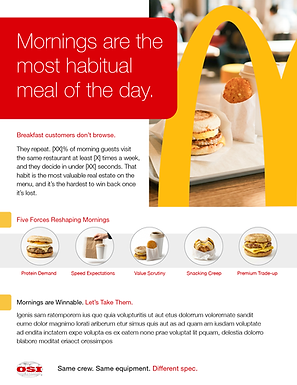
A deck is where a pitch happens, but it is not what stays in the room. The system had to carry into the leave-behind and into social, so every piece a client saw looked like it came from the same company on the same day.


Make the decisions once.
Let everyone else just type.
ROLE: Presentation system design, layout architecture and art direction. I built the template, then created the deck, one-pager and social posts shown here as portfolio pieces to demonstrate it. Figures and body copy are placeholder.